

Few phrases echo with such raw defiance as “Let’s roll.” Uttered by Todd Beamer aboard United Airlines Flight 93 on that fateful September 11, 2001, those words ignited a spark of collective courage that thwarted al-Qaeda’s deadly designs. As the plane hurtled toward a Washington target, likely the Capitol, Beamer, alongside Mark Bingham, Tom Burnett, and Jeremy Glick, rallied fellow passengers via frantic phone calls revealing the hijackings’ horrors.
“Are you guys ready? Okay. Let’s roll!” Beamer declared, his voice steady amid chaos. They stormed the cockpit, bare-handed against armed fanatics, forcing the jet to crash in a Pennsylvania field. Countless lives on the ground were spared, a testament to ordinary souls refusing to subcontract their fate to fate itself. In that airborne crucible, they embodied the truth: evil thrives when good men do nothing.
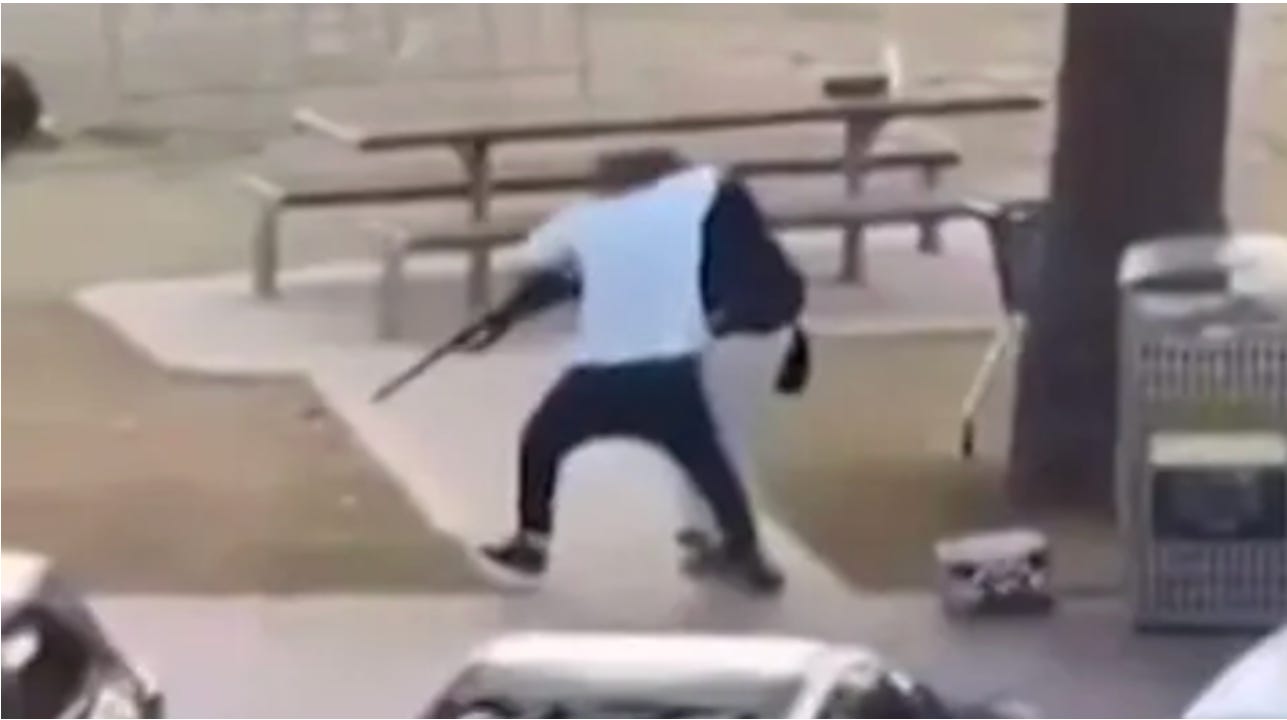
Fast-forward to our own turbulent times, and that spirit endures. Just a couple of days ago, amid the festive glow of Hanukkah candles at Sydney’s Bondi Beach, terror struck again. Two gunmen, their motives shrouded in Islamist inspired anti-semetic hatred, targeted a gathering of Jewish celebrants, unleashing a hail of bullets that claimed 15 lives, including a 10-year-old girl, a holocaust survivor and a British-born rabbi, and wounded at least 42 more. Amid the screams and pandemonium, one man stood tall: Ahmed al-Ahmed, a 43-year-old Syrian-born Muslim Australian and father of two.
Video footage, now viral across the globe, captures his instinctive charge, wrestling a firearm from one assailant, disarming him despite the peril. Injured but unyielding, al-Ahmed’s actions halted the rampage’s escalation, saving untold lives in that sun-kissed haven turned hellscape. Hailed as a hero by officials worldwide, his bravery bridges divides: Jewish donors have rallied to raise $1.3 million via GoFundMe for his recovery, praising his “selfless, instinctive, and undeniably heroic actions.” In a world fractured by suspicion, here is unity forged in fire. Award this man the George Cross, the Commonwealth’s pinnacle of civilian gallantry, let it gleam as a beacon for all who dare to protect the innocent.
These tales are no anomalies; they are the lifeblood of a society that refuses to kneel. Yet, over the past few decades, we’ve witnessed a insidious erosion of this very ethos. Police forces, in their possibly well-intentioned but misguided caution, have drilled into us the mantra: run, hide, tell. From school drills to public advisories, the message is clear, flee the bully, cower in shadows, await the state’s salvation. Disarmed by laws that strip citizens of self-defence tools, discouraged by a culture that paints intervention as reckless, we’ve bred a fearful populace. Handguns banned, knives regulated into oblivion, even pepper spray taboo in some quarters, the individual is left vulnerable, reliant on distant sirens. This subcontracting of societal security to officers of the state diminishes us all. Where once communities policed themselves through vigilance and valour, now we outsource our spines. But as these heroes remind us, true safety springs from shared responsibility, not state monopoly.
Consider John Smeaton at Glasgow Airport in 2007, when jihadists rammed a flaming Jeep into the terminal, propane tanks primed for catastrophe. A mere baggage handler, Smeaton charged in, kicking the assailant and bellowing, “This is Glasgow. We’ll just set aboot ye!” His raw Glaswegian grit, as he kicked the assailant in the balls, was joined by others like Stephen Clarkson, thwarted a massacre, limiting harm to a handful. No running for Smeaton, he stood, a bulwark against barbarism, proving that everyday folk can turn the tide.
Or Roy Larner in the 2017 London Bridge carnage, where ISIS zealots mowed down pedestrians and slashed through Borough Market, claiming eight lives. Pint in hand at a pub, Larner, a die-hard Millwall fan, lunged bare-fisted at the knife-wielders. “Fuck you, I’m Millwall!” he roared, absorbing eight stabs to distract them, enabling scores to escape. “Like an idiot I shouted back at them... I took a few steps towards them,” he later quipped, his humour masking profound courage. Larner didn’t hide; he embodied the lion-hearted refusal to let evil roam unchecked.
Fast-forward to November 2025’s Cambridgeshire train stabbing, initially feared as terror. Amid the blade’s frenzy injuring six, including a child, train guard Samir Zitouni shielded a young girl, grappling the attacker despite grievous wounds. Disarming and restraining him, Zitouni saved a carriage full of carnage. His family calls him “always been a hero,” and Transport Secretary Louise Haigh lauds his “bravery beyond words.” No subcontracting here, Zitouni owned the moment, a sentinel on steel rails.
In Sydney’s 2024 Bondi Junction stabbing, not terror, but terrorising nonetheless, Joel Cauchi’s rampage felled six. Enter Damien Guerot, “Bollard Man,” a French expat who seized a metal post and barred the escalator path. “It was instinct, I didn’t have time to think... you could see the shock in his eyes,” Guerot reflected. His blockade bought precious seconds, shepherding shoppers to safety. A foreigner standing for strangers, heroism holds no passport.
Then, the 2019 London Bridge stabbing by Usman Khan, fake bomb vest and all, slaying two at a rehabilitation event. Civil servant Darryn Frost snatched a narwhal tusk from the wall, thrusting it like a medieval lance. “I was screaming at him to drop the knife... I thought he had a bomb vest on. But I kept going,” Frost recalled, pinning Khan with aid from ex-prisoner Steve Gallant. Their impromptu alliance halted further slaughter, a quirky yet quintessentially British riposte to radicalism.
Across oceans, Abdul Haji at Nairobi’s 2013 Westgate Mall siege, where al-Shabaab gunned down 67. A businessman, pistol in hand after a brother’s desperate text, Haji stormed in, covering evacuations and clashing with terrorists. “The thought that I might die at Westgate mall never crossed my mind... I was just thinking about saving lives,” he said. No hiding for Haji, he reclaimed the space, one life at a time.
And in 2019’s Nairobi DusitD2 assault, another al-Shabaab horror claiming 21. Off-duty SAS veteran Christian Craighead, in civilian guise, geared up and plunged into the fray, neutralising threats and extracting hostages. “I just did what I had to do,” he understated, while witnesses dubbed him “a one-man army” who “ran into the attack while others ran away.” Military-honed, yet acting as any bold citizen might.
These paragons, Beamer to al-Ahmed, aren’t superhumans; they’re us, amplified by resolve. They shatter the narrative that we’re mere wards of the state, helpless without blue lights. In applauding them, we set altars for emulation. I hope, nay, pray, that in such straits, I’d muster their mettle, charging not cowering. For we crave a people who confront evil head-on, not a flock fleeing to nanny-state arms. Imagine societies revitalised: communities where neighbours safeguard neighbours, where the disarmed reclaim agency through audacity. No more the passive consumer of security; become its architect.
This isn’t nostalgia, like reading the old arts and crafts memorials in Postman’s Park, dreaming of a braver world, it’s necessity. As threats multiply, from lone wolves to organised malice, subcontracting fails. Heroes like these affirm: the individual bears society’s mantle. Let us teach our children not just to dial 999, but to stand firm. Award al-Ahmed the GC, yes, but more, let his deed inspire a renaissance of responsibility. In their stories, we find not fear, but fortitude; not despair, but defiance.
Here’s to the unbowed, the unbreakable, the true guardians of our world.
Sometimes people have no other choice but to show bravery in the face of evil, we shouldn't allow ourselves to be distracted from the deliberate importation of evil. Many more of us need to find the courage to disassemble the political systems which have caused this.
Thank you Gawain. Another excellent piece of writing which invokes reflection and examination of how ‘things’ were. I too, hope that there are many of us who can find ‘the hero’ inside us, should the occasion arise. Sadly, our society, our education and collective knowledge has diminished as time passes. My father used to say to me, “omnia vinces perseverance” - by perseverance you shall overcome all things, and I believed him, and still do!