
A Moat Defensive
Operation Fortress is not a new policy. It is the last piece of an old one.

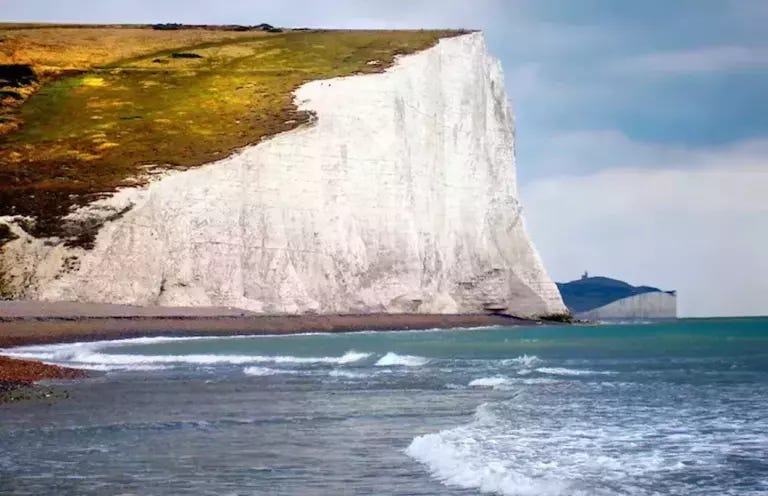
“This fortress built by Nature for herself
Against infection and the hand of war,
This happy breed of men, this little world,
This precious stone set in the silver sea,
Which serves it in the office of a wall,
Or as a moat defensive to a house,
Against the envy of less happier lands”
Richard II Act 1: John of Gaunt
Sixty thousand people crossed into Ceuta in a matter of days. At least eighty-six of them died, some swimming for Tarajal beach, some crushed in the stampede at the gates. Spain has been a signatory to the European Convention on Human Rights since 1979. Madrid’s answer was to give the job to the army, and the border held. No government fell, and no court in Strasbourg intervened.
It is worth being precise about what Spain actually did. The breach came on 30 July. Armoured fighting vehicles went to the Tarajal crossing alongside regular troops, drawn from the 54th Ceuta Regulars, the 2nd Legion Tercio and the 3rd Cavalry Regiment, with a further sixty soldiers flown from the mainland to reinforce the three thousand already stationed there. By 31 July around forty-eight thousand people had been returned to Morocco. One day.
That is the fact around which British legal opinion has been constructing elaborate reasons for a decade. We are told that a European state cannot use military force to hold a maritime frontier, that the Convention forbids it, that the Refugee Convention forbids it, that the law of the sea forbids it. Spain did it in a week.
Reform published Operation Fortress overnight. It runs to twenty-five pages and opens with endorsements from Brigadier Alan Litster OBE of the Royal Marines, Commander Chris Grace of the Royal Navy, and John Cail, a Merchant Navy chief engineer of thirty-eight years. A joint command under a Lieutenant General appointed by the Chief of the Defence Staff, drawing on the Navy, the Marines, the RAF and the Army, with Border Force, the Coastguard, the NCA, the police and the intelligence agencies embedded rather than consulted. An Integrated Surveillance Command giving that commander a sovereign picture of every launch, built from drones flown out of Lydd and Dover, Coastguard King Airs, RAF Poseidons, satellite and infrared. A four-stage cycle of detect, interdict, board, return. On day one a Reform Prime Minister convenes COBRA and declares the crossings a national emergency, and Zia Yusuf, as Home Secretary, makes the formal request for military assistance.
Note what the document rules out. No turnbacks, no pushbacks, no dragbacks of dinghies. The boats are not sent back. The people are taken aboard, given water, food, blankets and medical assessment, and carried back on a seaworthy vessel crewed by the Royal Navy to be landed safely ashore. The emptied craft may be seized or destroyed at sea. The dinghy is treated as evidence and scrap. The people are treated as people. That is the legal argument, it is a serious one.
The obvious objection is that we have tried this. Boris Johnson put the Royal Navy in charge of the Channel in January 2022 under Operation Isotrope. It ended a year later with crossings at a record and the Navy relieved to be rid of the thing.
But Isotrope failed for reasons that were documented at the time and are worth stating plainly. The Commons Defence Committee found that the MoD understood its mission as preventing migrants from landing on their own terms while the Home Office understood it as deterrence, and called the military objective incoherent, since a man in a dinghy wants to land in Britain and does not care whose terms he lands on. Government lawyers had already advised that turnarounds might not survive challenge. The Navy’s own objection, when the blockade was trialled in 2020, was ethical rather than operational. Given a mission whose terminal instruction was to deliver people safely to Dover, more ships and better sensors produce more arrivals, faster. Isotrope was a grey-hulled taxi service.
The end point under Fortress is Calais. That is not a difference of budget or capability. It is a difference in the order given, and it removes the precise thing the lawyers objected to, because nobody is being turned around in an unseaworthy boat. Everything else in the document, the joint command, the surveillance layer, the emergency legislation, exists to make that one instruction executable.
The precedent the plan leans on hardest is Australian. Operation Sovereign Borders began in 2013, replacing more than a dozen agencies whose overlapping remits had let everything fall between the cracks with a single joint agency task force under a Rear Admiral. Arrivals collapsed. For fourteen hundred days between July 2014 and August 2018 not one illegal boat migrant set foot on Australian soil. But the number that ought to settle the humanitarian argument is the other one. Roughly twelve hundred people drowned attempting the crossing between 2007 and 2013. Since Sovereign Borders began, none have.
Australia towed people back and left them to finish the journey unescorted. Fortress does not, and the difference is to Reform’s credit. What the Australian experience establishes is narrower and more useful than its critics allow, which is that the deterrent is the certainty of interception and not the manner of the return. Once the crossing cannot succeed it stops being attempted, and the drownings stop with it. Fourteen people have died in the Channel this year. Four of them were found on 30 July.
The feasibility objection is smaller than it sounds once you look at the tides. Smugglers launch on slack water in light winds, which makes the windows forecastable hours ahead, and the Home Office already grades every day red, amber or green on that basis. Red days accounted for eighty-four per cent of all arrivals between May 2021 and April 2025. The busiest single day since 2024 brought eighteen boats. Against that, Reform proposes a standing fleet of ten vessels able to put twenty rigid-hulled inflatables in the water at once, three River-class offshore patrol vessels that are already in home waters and could be tasked this month, and a Bay-class landing ship holding up to seven hundred people at sea so that interceptors need not break off and steam for port every time they fill up.
The document is candid about the inheritance. Thirty years ago the Royal Navy had twenty-two frigates and fifteen destroyers. It has seven and six, and more admirals than warships. Reform proposes to do this with what exists and rebuild afterwards. Set against the three billion pounds a year now spent on asylum accommodation alone, it is also the cheaper course.
Which brings us to the money already spent on the alternative. Sandhurst in 2018, forty-five million. The Joint Action Plan in 2019. The Security Accord in 2021, fifty-four million. Sunak’s package in 2023, four hundred and seventy-six million. One-in-one-out last year. Then Shabana Mahmood’s Border Security Partnership in April, six hundred and sixty-two million pounds for 1,392 personnel on French beaches, with a clause allowing us to withhold a hundred million if not enough journeys were stopped. Well over a billion pounds has now been handed to France to stop the boats, and last week French police acknowledged they are under orders not to intervene once a dinghy is in the water. Their navy escorts the crossings and hands out life jackets. Fortress asks nothing of the French that they have not already promised six times over.
On law, the case everyone reaches for is Hirsi Jamaa, where Strasbourg found against Italy for putting people intercepted at sea back into Libya. Libya was the point. France and Belgium are not Libya, and the prohibition on refoulement is not engaged by landing a man on a safe European shore. The case that actually governs is N.D. and N.T. v Spain, in which the Grand Chamber held in 2020 that Spain had not breached the ban on collective expulsion when it immediately returned people who had stormed the Melilla fence in numbers. The Court’s reasoning rested on the conduct of those crossing, on the deliberate choice to force entry en masse rather than use a lawful route. As for the safe third country rule that makes these claims inadmissible in the first place, it sits in the Nationality, Immigration and Asylum Act 2002, and it was put there by Tony Blair.
Operation Fortress cannot be read on its own, and the party has not asked anyone to read it that way. It is the third instalment of a settlement that has been assembled in public since last summer.
Operation Restoring Justice came in August 2025. Withdrawal from the ECHR, repeal of the Human Rights Act, an Illegal Migration (Mass Deportation) Bill placing a statutory duty of removal on the Home Secretary, a UK Deportation Command, and secure removal capacity for twenty-four thousand. That deals with people already here.
Prioritising UK Citizens followed in September. Abolition of indefinite leave to remain, existing awards rescinded, a five-year renewable visa with higher salary thresholds and mandatory English. That deals with the pipeline from temporary presence to permanent settlement, and with the 3.8 million who arrived on long-term visas between 2021 and 2024.
Neither survives the open sea. A removal programme running against an uncontrolled inflow is a maths problem, and maths is precisely where every government since 2018 has been beaten. You cannot deport your way out of a queue that refills every morning at dawn off Gravelines. The document puts it in six words. The Mass Deportation Bill removes the reward, and Fortress removes the opportunity.
This is also where the argument about legal and illegal migration stops being two arguments. Over two hundred thousand have come by boat in eight years, thirty-six thousand of them in the twelve months to May. Nearly four million came by visa in three. The boats are what the country can see. The visa system is what changed the country. Reform is the only party that has put a policy against both, and the reason it can is that it treats them as one question about who decides the composition of the nation. The answer offered in each case is the same, which is that the British people decide, through Parliament, and that no treaty ratified in 1951 binds them in perpetuity.
The border is not an immigration issue. It is a question about where sovereignty actually sits, and once you notice that, the rest of the programme stops looking like a grab-bag and becomes a single position.
Consider what the Climate Change Act did. It created a statutory duty, handed the timetable to a committee of experts, and placed the cost and the pace of the largest economic transformation in modern British history beyond the reach of any election. How you heat your house, what you drive, whether your area keeps its industry. None of it was ever put to a vote in terms a voter would recognise. That is the same move performed on the economy as the Convention performs on the border, which is the removal of a decision from the people who live with the consequences and its transfer to a body that does not.
Reform’s opposition to Net Zero and its opposition to the ECHR are not two policies that happen to appeal to the same voters. They are one principle applied twice.
The cultural argument follows from the same root and is the one the party’s opponents find hardest to hear. A country is not only a border and a tariff regieme. It is an inheritance of particular forms, the parish and the common law and the language, and these are not preserved by accident. They are held by people who know what they have. Say so and you are called a nativist. The alternative on offer is a Britain understood as an administrative zone with a few good airports, and there is no evidence anyone ever voted for it.
Andy Burnham has been Prime Minister for a fortnight. More than two thousand people have arrived by small boat in that time. He has said almost nothing about it, which is consistent, because on the day he accepted the leadership he announced that Labour would not try to out-Reform Reform. But he has said he will be “relentless” and that he wants more safe and secure ways of entry. No boat was ever stopped by a vibe.
Take him at his word. That is not evasion, it is a position, and an honest one. He intends to fight on hope and the forgotten places and a ten-year plan, and he does not intend to compete on the border at all. Which means that for the first time since 2016 there is no ambiguity about what a vote decides.
Which brings us to what Farage said yesteday.
The next election will be an existential fight to save the country we love, a mission I have now been fighting for over 30 years. After two national election victories in as many years, many people now recognise that it will be a binary choice between Reform UK and Labour.
The statement is being read in Westminster as a message to the Conservative benches and perhaps to members of Restore, and it is, but the important sentence is the one about the team. He is prepared to put country before party, as in 2019. He will never turn his back on the people who built this. Read together, that rules out that which the commentariat keeps predicting, which is a negotiated pact trading seats over the heads of the members who won them. What it opens is a door, one person at a time.
Operation Fortress is what stands in the doorway. A document this specific cannot be signed up to in general terms. There is no way to endorse a Lieutenant General, a Bay-class landing ship and a return to Calais while retaining a private reservation about Article 2. Either the Navy is given the order or it is not, and everyone who comes across has to say which.
John of Gaunt called this island a fortress built by nature for herself, served by the silver sea in the office of a wall, a moat defensive to a house. He was describing something the geography did unattended. It has not done so for eight years. The moat is still there. What has been missing is anyone willing to man it.
Over the last decade there has been only one UK policy in evidence - the enrichment of lawyers
Its all very good Gawain and it would be great if France allows them to walk back in down a gangplank at Calais or landed on a beach. However what happens if France sees one of our ships coming into its 12 mile legal limit and tries to block it there does the plan cover this. I think its a good plan and watching the video its a very impressive plan obviously researched with meaningful endorsements from the military. However Reform does need a defence spokesman to work on this with Zia and Nigel on this.