
Iran's Undue Influence:
A Damning Indictment of Britain's Soft Underbelly

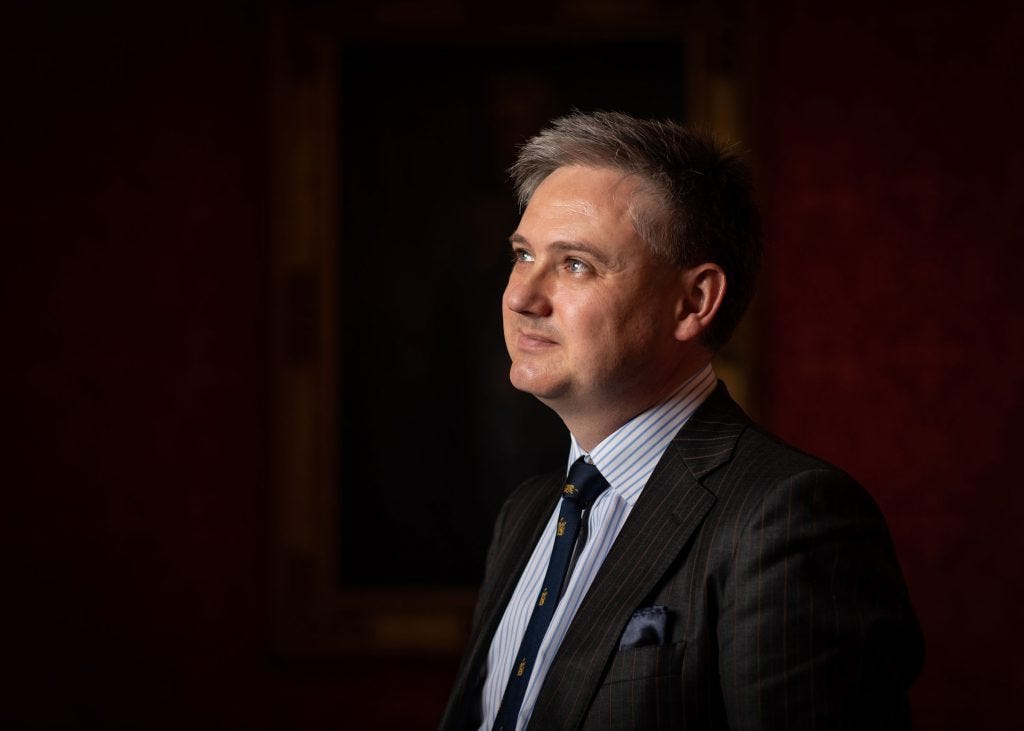
Lord Walney’s report, Undue Influence: The Iranian Regime’s Abuse of the UK Charity System and the Limitations of Oversight, lands like a long-overdue thunderclap in the vacuum of Whitehall. Just published, this 109-page exposé, written by the crossbench peer and former Independent Adviser on Political Violence, lays bare how the Iranian regime has wormed its way into Britain’s charitable sector, exploiting it as a Trojan horse for ideological infiltration, espionage risks, and soft power machinations. It’s a sobering read, one that should have governments past and present hanging their heads in shame. Yet, as someone who’s watched the political class dither for decades, I’m resigned to the fact that this will likely gather dust alongside countless other warnings about foreign meddling. It is worth a read, if misery and foreboding is your pleasure. It has of course been attacked by a host of online commentators as being the work of a Zio…
Walney, drawing on his credentials from the Royal College of Defence Studies and his co-chairmanship of the All-Party Parliamentary Group on Defending Democracy, dissects a network of UK-registered charities with alarming ties to Tehran’s theocratic apparatus. The report examines ten such organisations, though it names key players like the Islamic Centre of England (ICEL), which once constitutionally mandated a trustee appointed directly by Iran’s Supreme Leader. Even after amending that clause, the institutional rot persists. Senior figures in these charities overlap with Iranian bodies such as the Supreme Council of the Cultural Revolution and Al-Mustafa International University, the latter sanctioned by the US Treasury for recruiting for the IRGC’s Quds Force. Walney uncovers governance entanglements, shared trustees, and engagements with IRGC commanders, including eulogies for the late Qasem Soleimani, whom half the charities publicly mourned after his 2020 death.
The ideological alignment is chilling. These entities peddle Khomeinist doctrine, venerating Ayatollahs Khomeini and Khamenei, while promoting narratives supportive of proxies like Hezbollah and Hamas. Events like Quds Day rallies, hosted by these groups, have been laced with rhetoric decried as antisemitic, though the organisations deny any such intent or Iranian alignment. More disturbingly, activities target children: the ICEL’s filming of kids saluting in the “Hello Commander” song, pledging fealty to the Mahdi and, implicitly, the regime’s leadership. This isn’t benign cultural outreach; it’s the transmission of revolutionary zeal to impressionable young minds in Britain’s Shia communities.
Walney situates this within a broader security threat. UK intelligence views Iran as an active adversary, engaging in espionage and transnational repression. Charities provide platforms for schmoozing parliamentarians, universities, and local authorities, activities a former Independent Reviewer of Terrorism Legislation equates to espionage when state-directed. The report notes how these groups foster hostility toward Iranian dissidents, with experts reporting diaspora members fearful of venturing into Brent, home to several such charities. While stopping short of alleging direct intelligence coordination or terror plots, Walney raises profound questions about personal and institutional links to the IRGC. (While we are at it, why hasn’t this Government proscribed the IRGC? Anyone?)
Yet, the real fury boils over at the regulatory failures. Eight of the ten charities face Charity Commission scrutiny, over links to Iran, Soleimani events, governance lapses, and financial improprieties. But investigations drag on, opaque and trustee-focused, creating a “compliance trap” where procedural tweaks mask ideological continuity. Trustees rotate, entities endure. Four even claim Gift Aid, topping up donations with taxpayer cash; one snagged a Covid grant. One, the Islamic Human Rights Commission Trust, which organised the now banned Hate March (though the static demonstration remains unbanned) is reported to have received £450,000 in gift aid, that is taxpayer support. Walney lambasts this as inadequate, arguing the system isn’t geared for systemic extremism or hostile state influence falling short of criminality.
And here we come to the heart of my resignation-tinged rage: successive governments, Conservative, Labour, coalition, have allowed this festering sore to grow. From Blair’s naive engagement to Cameron’s austerity-blind oversight, May’s Brexit distractions, Johnson’s bluster, and now Starmer’s lot, they’ve all turned a blind eye. The National Security Act 2023 and Foreign Influence Registration Scheme are steps forward, but too little, too late for this charitable backdoor. Walney underscores the irony: completed before the US-Israeli strikes on 28 February 2026 that killed Khamenei and decimated Iran’s leadership, the report’s warnings feel eerily prescient amid the regime’s collapse.
But nothing encapsulates this governmental myopia like the scandal of Foreign Office civil servants swanning off to the Iranian Embassy’s reception on 12 February 2026. Mere weeks after Tehran’s security forces slaughtered at least 36,500 protesters in a brutal crackdown on nationwide unrest, sparked by economic collapse and escalating into demands for regime change, British diplomats sipped cocktails celebrating the Islamic Revolution’s anniversary. The Telegraph exposed this grotesque tableau: mandarins rubbing shoulders with regime representatives while bodies piled up in Iranian streets. And the justification? Oh, the cloth-eared drivel about “maintaining diplomatic channels” and “engagement for influence.” As if toasting a theocracy mid-massacre fosters anything but complicity! It’s tone-deaf, spineless appeasement, echoing Chamberlain’s ghosts, while dissidents bleed and the diaspora cowers. How many more reports must we endure before Whitehall grows a spine?
Walney’s recommendations offer a roadmap out of this quagmire, urging a shift from inducement to disruption. Amend the Charities Act 2011 to empower the Commission against extremism and state influence, expanding disqualification to immigration-barred or FIRS-designated individuals. Expedite appeals via Judicial Review-like processes, mandate cross-government intel sharing, flag ongoing probes publicly, vet for Gift Aid, and verify trustee identities. These are sensible, overdue fixes to dismantle Iran’s soft power edifice.
In the end, Undue Influence is a clarion call, but I’m resigned to its fate. Governments come and go, each more myopic than the last, while hostile actors exploit our liberties. Walney has done his bit; now it’s time for action, lest we wake to find the mullahs’ influence entrenched deeper still. If Starmer’s administration ignores this, as predecessors did, history will judge them harshly, and rightly so.
Thank you for this article. I read it with shock but explains why after a full enquiry Cameron never banned the Muslim brotherhood. It also explains why we see 2nd generation terror incidents…. I read the report attached and sent it to ReformUK to ensure they have Bills and policies to deal with these charities immediately. This is all part of taking our nation back.
Hi Gawain as mentioned I sent your article to Danny Krugers office so they can work on policies re these “charities’… my email has gone to Danny now…