
The Hinge
Why Makerfield Is the By-Election of Our Age

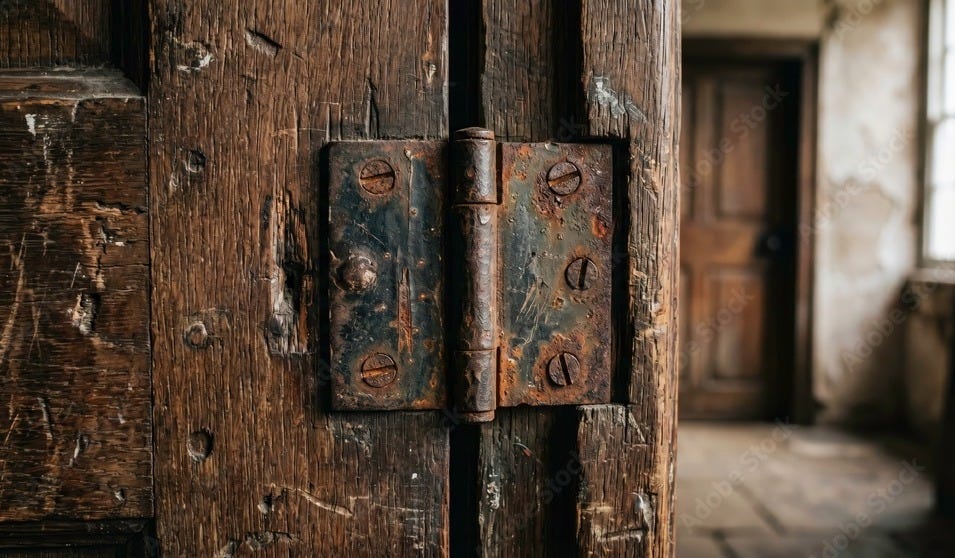
There is a moment in some elections when the air changes. Not the dreary, managed kind of political weather that passes for news most weeks, the press release, the rebuttal, the choreographed outrage, but something older and stranger, like the shift in a barometer before a storm nobody has named yet. Makerfield, on 18 June, Waterloo Day, is that moment.
I want to make a large claim, and I shall make it plainly: this is the most consequential by-election since the introduction of universal suffrage. It is the hinge on which the door of the country will swing. What lies beyond it depends entirely on which way it turns.
To understand why, it helps to look back at those rare occasions when a single constituency has embodied something far larger than itself. The most instructive comparison, and one that repays close attention, is the Middlesex elections of 1768 and 1769. John Wilkes, radical, libertine, demagogue, genius, returned from his French exile and stood for Middlesex as an affront to the entire political establishment. He was expelled from the Commons. He stood again. He was expelled again. Three times the electors of Middlesex returned him. Three times Parliament refused to seat him, eventually declaring his defeated opponent the duly elected member. What they were really debating, though they would not have put it in these terms, was who gets to decide. The people or the machine. The voter or the vested interest. It was the question of political legitimacy in its most naked form, and it shook the constitution to its foundations. Wilkes won, eventually. Parliamentary reporting was freed. The right of electors to choose their own representatives was vindicated. It took years. But the Middlesex elections were not really about one loud, squinting radical. They were about what England was.
Makerfield is about what England is.
The seat itself has an almost theatrical aptness. There is no town called Makerfield, the constituency takes its name from the ancient district whose suffix echoes through Ince-in-Makerfield and Ashton-in-Makerfield, mill and pit country on the western edge of Greater Manchester, formed as a constituency only in 1983 and Labour-held ever since. It is Red Wall in its essence: working-class, post-industrial, patriotic in the quiet, undemonstrative northern way. The kind of place that voted Leave and then, in 2024, still came back to Labour because the habit ran deeper than the grievance, for the moment.
That moment is over.
In May 2026, Reform UK swept every council ward within the Makerfield constituency. Not some of them. Every one. Their vote share across the wards ran at roughly fifty per cent against Labour’s twenty-seven. In neighbouring St Helens, they took seventy-one per cent of all seats. The scale of this is not a political trend. It is a transformation.
In the 2024 general election, at the height of the anti-Conservative wave that gave Starmer his supermajority, Labour held Makerfield with 45.2 per cent of the vote. Reform came second with 31.8, a gap of thirteen points. Since then, the national polling has moved sharply, Labour down, Reform up, and the local elections have confirmed that the movement in this part of England is not merely symptomatic but structural. The betting markets, for what they are worth, currently give Andy Burnham a 57.5 per cent chance of winning. That is not safety. That is a coin in the air.
Which brings us to the candidates, and here the contest acquires the quality of parable.
On the Labour side, Andy Burnham, arguably Labour’s most capable political operator of his generation, a man who has spent a decade building the Greater Manchester mayoralty into something resembling a personal fiefdom of genuine popular affection. He is the politician’s politician refined to an art form: every answer calibrated, every emotion deployed with precision, every defeat metabolised into the narrative of resilience. He is good at this. Very good. And he knows it, which is part of the problem. He has come to embody the professional political class, the machine men and women who move from student politics to researcher to candidate to minister without ever quite getting their boots muddy. Burnham is better than most of them, and cannier, but he is of them.
Against him stands Robert Kenyon, self-employed plumber, former NHS specialist technician in Lancashire, army reservist, and now, since the May local elections, a councillor for Bryn with Ashton-in-Makerfield North on Wigan Council. He ran in 2024 and lost by 5,399 votes. He ran in 2026 for the council and won. He was born in Makerfield, a fact he has noted, with some justice, that no MP for the constituency has ever been able to claim.
Farage has called it David and Goliath. It is actually more interesting than that. It is the oldest English story, the gentleman and the tradesman, the career politician and the man who fixes pipes, the one who talks about the people and the one who is the people. The contrast is not manufactured. It is biographical.
Now to the vision, and this is where Makerfield ceases to be a by-election and becomes a referendum on what Britain is going to be.
On one side of this argument sits the Labour programme: management of decline dressed up as progressive governance; rule by lawyers and judicial review; the gravitational pull of international law and its attendant bureaucracies; the cultural apparatus of DEI; sky-high energy costs underwritten by CfD strike prices that would make a Victorian railway speculator blush; mass immigration unmanaged, uncontrolled; farm taxes that are accelerating the enclosure of England’s working countryside; trial by jury quietly chipped away; and behind it all, barely concealed, the long desire to rejoin the European Union. It is a coherent worldview, in its way. It is the worldview of a professional class that has never had to compete for anything except examination results and has confused the interests of that class with the common good. They are sincere. That is almost the worst thing about them.
Reform offers the diametric opposite. Border control that means it. Energy policy that does not regard the countryside as a field of financial instruments for City funds. The restoration of common law and the jury. Lower taxes on working people. A government that is legible to the people it governs, rather than accountable only to international bodies and activist courts. There is much to debate in the detail. There always is. But the governing instinct is recoverable, it points towards the governed.
So what does the result mean?
If Burnham wins, he will say, and the commentariat will amplify, that he has proved Labour can see off Reform. That a sufficiently popular candidate, with the right regional roots and the right retail skills, can hold the Red Wall. He will use it as a springboard for the leadership, and he may well get it. He will frame himself as the man who saved Labour from the abyss, the moderniser who understood the electorate, the northern tribune who broke Reform’s momentum. Reader, he cannot. But he might delay what is coming. A Burnham victory is not a Labour recovery, it is a postponement of reckoning, bought with one exceptional candidate in one exceptional set of circumstances. The structural numbers in those ward results do not lie. They merely await their next appointment with history.
If Kenyon wins, something different happens. The government, though it may remain in office, is effectively over. Starmer, already haemorrhaging ministers, already confronted by nearly a hundred of his own MPs calling for his resignation, already the diminished occupant of a Downing Street that feels more like a waiting room than a command centre, becomes a caretaker in the full sense. More than that: a Reform win in Makerfield, on this terrain, against this opponent, with this backdrop, signals to the country that there is no safe Labour seat. That the Red Wall is not cracking but gone. That the popular revolt that began with the Brexit referendum, passed through UKIP and the Brexit Party and the 2019 election, and then seemed to be absorbed by the Conservative government, has in fact never been resolved, it has only been waiting.
The future of a country is not usually visible in a single ward in Greater Manchester. But sometimes the hinge is a small door. In 1769, John Wilkes’s stubborn insistence on his seat for Middlesex did not look, from the outside, like the birth of a free press and representative democracy. It looked like a rowdy radical making a nuisance of himself in a rotten system.
Sometimes the nuisance is right, and the system is what needs fixing.
Makerfield, 18 June. The plucky plumber against the political class. The hinge turns, and England watches.
Nice one again Mr. Towler. I wonder if Mr. Kenyon realises what he may be about to achieve. It may place him firmly into political history, referred to at the next crucial by-election and the one after that. Will Reform UK of the future regale Mr.Kenyon's daring do, his pluck, his courage, his audacity to stand and turn the country, like your hinge, rusty and creaky, turning the door for the first time in an age where it's been shut to outsiders. Should he win I'll certainly be holding a cold beer aloft in congratulations. And so, I expect, will old Two Tier Kier.
Really enjoyed this piece. One thing I particularly value about your writing is the way you connect obscure or overlooked moments from history to modern political events in a way that makes current affairs feel part of a much longer national story. The comparison with the Middlesex elections and John Wilkes was fascinating and genuinely illuminating rather than just decorative historical reference.
I’m not a Reform supporter or voter, but I strongly believe there’s enormous value in reading people you don’t always politically agree with. Too much politics now is people remaining inside their own tribes and talking past one another. Whatever people think of the conclusions, your writing is consistently thought-provoking, historically informed and engaging. Thank you!!