
The Establishment's Ongoing War
The Assault on Gen Z's Free Thought

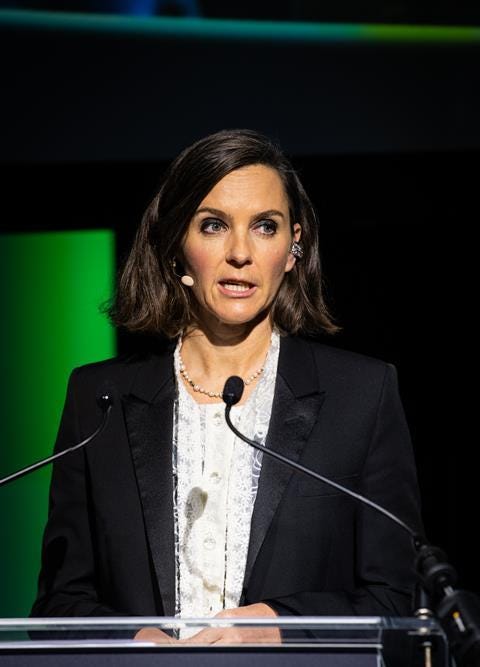
The establishment never sleeps, does it? At the beginning of last year Channel 4, came up with a glossy report dressed up as concern for the youth. “Gen Z: Trends, Truth and Trust,” they called it, a title that drips with the sort of paternalistic sanctimony you’d expect from a broadcaster that’s long been the darling of the liberal elite. Delivered in a keynote speech that was part TED Talk, part sermon, then CEO, and recently gonged Alex Mahon CBE painted a picture of Britain’s young people as lost souls adrift in a sea of misinformation, desperately in need of rescue by surprise, surprise. the very institutions that have spent decades alienating them. What is concerning is that some of her predictions are coming to pass.
But let’s not kid ourselves. This isn’t a fair-minded attempt to help Gen Z navigate the news. It’s a brazen power grab, a sly manoeuvre by the modern establishment to control what young people read, watch, and believe. Through a highly sceptical lens, one that sees through the veneer of altruism, this report reeks of desperation. The old guard is panicking because Gen Z isn’t buying their narrative anymore. And why should they? These kids have grown up in a world stacked against them, jobs vanishing to AI, a housing market that’s a sick joke, student debts piled high by a system that promises opportunity but delivers chains. They’re not falling for “fake news”; they’re spotting the real biases in the so-called trusted sources. Mahon’s call? Rein in the wild west of the internet, slap labels on “reliable” content, and let the state play gatekeeper.
Freedom of speech? That’s so last century.
Let’s dissect this beast, starting with the findings that Mahon and her team at Channel 4 trot out as evidence of a crisis. The report, based on surveys and focus groups with 13- to 27-year-olds, reveals some eye-opening stats. Nearly half of Gen Z men, 45%, believe we’ve gone so far in promoting women’s equality that it’s now discriminating against men. Another 44% think women’s rights have gone far enough. Then there’s the democratic disillusionment: 52% reckon the UK would be better off with a strong leader who doesn’t bother with parliament or elections, and a shocking 33% even flirt with the idea of the army taking charge. Trust in the media? Flatter than a pancake. Young people put as much faith in posts from friends (58%) or influencers (42%) as they do in established journalism. A third trust alternative internet personalities, compared to just 12% of older folks.
Mahon frames this as a tragedy, a generation bamboozled by algorithms and echo chambers. But hold on, isn’t this just Gen Z waking up? These aren’t the ramblings of misguided youth poisoned by TikTok trolls. They’re the rational responses of a cohort that’s been shafted by the system. Think about it: while boomers and Gen Xers climbed the ladder, Gen Z stares at a rungless wall. AI is automating entry-level jobs faster than you can say “ChatGPT,” leaving graduates with worthless degrees and mountains of debt, courtesy of tuition fees hiked by governments that now preach fiscal responsibility. Housing? Forget it. Prices have skyrocketed, thanks to mass immigration policies pushed by the same elite that lectures on diversity while hoarding wealth in leafy suburbs. And don’t get me started on the cultural wars: young men feeling emasculated by endless “toxic masculinity” narratives, while young women grapple with the fallout of a society that’s promised equality but delivered burnout.
No wonder they distrust the mainstream. The BBC, Channel 4, The Guardian, these aren’t neutral arbiters; they’re mouthpieces for a progressive orthodoxy that’s out of touch with reality. Gen Z knows this because they’re digital natives, far more adept at spotting spin than their elders. They’ve seen how “fact-checkers” twist narratives to suit agendas, how stories on climate alarmism or gender ideology get amplified while inconvenient truths, like the economic costs of net zero or the failures of multiculturalism, get buried.
The report admits Gen Z has a “magpie” approach to information, piecing together truths from diverse sources. Mahon sees chaos; I see independence. These kids aren’t disengaged from democracy; they’re disengaged from a sham version where parliaments rubber-stamp elite decisions and elections offer no real choice.
Now, to the heart of the threat: the calls to action. Here, the mask slips completely. Channel 4 isn’t content with hand-wringing; they want intervention. First up, a “trustmark”, a shiny badge for content from “professionally produced, regulated media.” In other words, a state-sanctioned seal of approval that says, “This is safe; everything else is suspect.” Tech companies, algorithms, advertisers, all nudged to prioritise this labelled content. Sounds innocuous? It’s censorship by another name, forcing platforms to demote alternative voices under the guise of quality control.
Then there’s the demand for “algorithmic prominence” for public service media (PSM) like Channel 4 on social platforms. Not just visibility, but a “fair revenue share” too, because why not monetise the monopoly? Building on existing TV regulations, this would embed establishment content into feeds, drowning out influencers and independents. And for the cherry on top: regulation of AI. Mahon wants large language models trained on “validated PSM content” for better outputs, with transparency on data and compensation for creators.
Translation: Feed AI the official line, starve it of dissenting views, and ensure the next generation of tech reinforces the status quo.
Viewed through the matrix of independent thought, this is pure state control. Why should government and regulators decide what’s “trusted”? We’ve seen this movie before, Ofcom, the UK’s media watchdog, already polices broadcasters with an iron fist, fining those who stray from “impartiality” (read: the approved viewpoint). Extending this to online spaces isn’t protection; it’s suppression. Mahon claims it’s to counter “polarising, misleading nature and anger-eliciting algorithms,” but who’s to say Channel 4’s output isn’t polarising? Their programming often pushes a left-liberal agenda, from climate hysteria to identity politics. Gen Z’s trust in alternatives isn’t a bug; it’s a feature of a free society where people seek out what resonates, not what’s force-fed.
This isn’t new. History is littered with authorities trying to cork the bottle of free information. When Gutenberg invented the printing press in the 15th century, the Church and monarchs freaked out. Pamphlets spread Reformation ideas like wildfire, so they imposed licences, censorship, and burnings. Fast-forward to radio, television, the internet: each time, the powers-that-be scramble to regulate. In China, it’s the Great Firewall; in the West, it’s subtler, via “hate speech” laws and fact-checking cartels. Across civilisations, from ancient Rome’s edicts against seditious writings to the Ottoman Empire’s printing bans, those in power fear uncontrolled ideas. Mahon’s report fits the pattern: the establishment senses Gen Z slipping away and responds with control, not reform.
Enter Dominic Cummings, the Brexit architect whose recent interview lays bare the establishment’s playbook. In a no-holds-barred chat on The Spectator podcast, Cummings warns that the system will “do anything” to stop outsiders like Nigel Farage and Reform UK. “They’ll bug his phone and leak that,” he says. “Deep state plans to embroil Farage in investigations, like they did to Trump.” Whitehall, the media, the civil service, all aligned against Reformers who threaten the cosy consensus. Cummings, no stranger to battling the blob, describes the Tories as irrelevant vagrants and (pointlessly according to me) urges a merger with Reform to shatter the duopoly.
Why mention this? Because Channel 4, as a state-backed entity, is part of that blob. Mahon isn’t just a CEO; she’s a cog in the machine that views independent thought as a virus. Why push the state as gatekeeper? To neuter threats like Farage, who taps into the same disillusionment Gen Z feels, anti-immigration, pro-sovereignty, sceptical of elites. If young people trust influencers over Channel 4 News, they might vote for real change, not the managed decline offered by Labour or Conservatives. Of course there is plenty of evidence that the state is already financially co-opting influencers into its monopoly.
Delving deeper into Cummings’ thesis, it’s clear the establishment’s attempts to destroy Farage have already begun, often with the subtlety of a sledgehammer. Take the 2024 general election campaign: Labour ministers and their allies didn’t hold back. Wes Streeting, then shadow health secretary, branded Farage a “Tommy Robinson tribute act,” implying far-right thuggery. But it escalated, figures like David Lammy compared Reform’s rhetoric to that of 1930s fascists, while others whispered of Nazi sympathies among candidates. Reports surfaced of Reform hopefuls posting pro-Hitler memes or calling Jimmy Savile a “legend,” which opponents seized upon to paint the entire party as worse than Nazis or paedophile apologists. By 2025, as Reform surged in polls, the attacks intensified. In local elections, where Reform won control of councils like Staffordshire and Lincolnshire, ministers decried them as “far-right extremists” endangering democracy. One Labour MP even likened Farage to Savile himself, accusing him of grooming voters with false promises.
And now, in early 2026, we’ve got the latest wheeze: the government’s “urgent review into foreign financial interference in UK politics,” announced with all the fanfare of a witch-hunt. Led by none other than Philip Rycroft, a quintessential establishment mandarin whose career is a litany of policy fumbles and institutional inertia. This review, ostensibly to probe illicit foreign money in politics, including cryptocurrencies, reeks of selective outrage. It spotlights cases like former Brexit Party MEP Nathan Gill’s conviction for taking bribes to spout pro-Kremlin nonsense (a case I have written about here), and Christine Lee’s covert work for the Chinese Communist Party. Fair enough, but notice the glaring omissions: only that glancing nod to China, and absolutely squat on the European Union’s tentacles in British political and cultural life. The EU pours millions into NGOs, think tanks, and cultural projects that subtly, or not so subtly, push pro-Brussels agendas, from Remain campaigns to environmental lobbies that align with EU directives. Yet this gets a free pass, while the review’s laser focus seems tailor-made to scrutinise Reform UK, which has faced baseless whispers of foreign ties, particularly Russian, amid its anti-establishment surge. Nobody wants foreign influence on our politics, of course not. But the focus does seem transparently one-sided.
The Orwellian-named “Defending Democracy Taskforce,” under which this review falls, is chaired by Security Minister Dan Jarvis, reporting to Housing Secretary Steve Reed. Reed thunders about “removing the stain” on democracy, citing Russian aggression, but one can’t help wondering if the real target is domestic dissenters like Farage. Rycroft, tasked with delivering recommendations by March’s end, embodies the blob Cummings rails against.
As Permanent Secretary at the Department for Exiting the European Union from 2017 to 2019, he presided over the chaotic Brexit negotiations, criticised for failing to empower civil servants or adapt to devolution, leaving the Union on the brink, as his own later reports admit. He’s lambasted Whitehall’s “homogeneity of thought,” yet his tenure exemplifies it: systemic failures in constitutional management, with governments chipping away at legitimacy through short-termism. Critics point to his role in the erratic evolution of the British constitution, where decades of unmanaged change have eroded public trust. And civil servants like him rarely face consequences, as recent exposés note, from Brexit blunders to devolution disasters. Appointing him to “defend democracy” is like putting the fox in charge of the henhouse.
Yet, here’s the rub: these smears aren’t working as intended. If anything, they’re backfiring spectacularly, strengthening Reform’s support. Polls tell the tale, after Farage resumed leadership in June 2024, Reform’s vote share jumped from single digits to 16% within weeks, despite the mud-slinging. By February 2025, they topped a YouGov poll at 25%, overtaking Labour and the Tories. The May 2025 local elections saw them triumph. In by-elections like the one for Runcorn and Helsby, with voters flocking despite, or because of, the establishment’s hysteria.
It’s classic underdog appeal: when the blob gangs up, it looks like bullying, not justice. Farage thrives on it, portraying himself as the plucky outsider against the machine. Even internal rows, like Rupert Lowe’s 2025 accusations of a “malicious smear campaign” by Farage, faded as supporters rallied. By September 2025, Reform peaked at 32%, only dipping slightly to 30% by December amid fresh controversies over Russia links and racism claims, claims that point to Cumming’s suggestions being true. But overall, the trend is upward, a testament to Cummings’ point that the establishment’s dirty tricks merely expose their fear. This latest review, with its biased scope ignoring EU meddling while homing in on perceived Reform vulnerabilities, will likely fuel the fire, convincing more voters that the system is rigged against change-makers.
This co-opting of once-rebellious institutions is telling. Take Private Eye, that venerable satirical rag, once a byword for skewering the powerful, now just another mouthpiece kicking downwards. In its heyday, it punched up at pompous politicians and corrupt elites. Today? It sneers at Farage and Reform as “racist relics,” aligning with the blob while ignoring Labour’s scandals. Same with BBC comedy: shows like Have I Got News For You used to lampoon the lot, but now they’re merely establishment echo chambers, mocking Brexiteers and populists with smug superiority. Ian Hislop and Paul Merton reserve their sharpest barbs for Farage, portraying him as a pint-swilling charlatan, while giving soft-soap joshing to Government figures. It’s not satire; it’s propaganda, reinforcing the very hierarchies they once challenged.
But here’s the optimism: the truth will out, no matter what the establishment tries. History shows that every attempt to stifle information fails in the end. The printing press democratised knowledge, leading to enlightenment and revolutions. The internet, despite crackdowns, has empowered billions to bypass gatekeepers.
Gen Z, with their savvy and scepticism, are the vanguard. They’re not buying the polycrisis narrative without question; they’re demanding evidence, nuance, and authenticity. As AI evolves and platforms decentralise, the establishment’s grip will weaken. Reform UK, or whatever rises next, will harness this energy, polls show their resilience, surging despite the onslaught. The penumbra of power, broadcasters, regulators, tech overlords, can scheme all they like, but free speech endures. In the words of an old rebel: the arc of history bends toward truth, and no amount of trustmarks can straighten it.
So, to Mahon and her ilk: thanks for the report. It’s a roadmap not to trust, but to resistance. Gen Z isn’t the problem; they’re the solution. And in a truly free society, that’s something to celebrate.
A great piece Gawain.
It’s like Dorothy has pulled back the curtain to reveal there is no Wizard, just a desperate old man, clinging to power.
And the ruling elite’s response is, ‘we need a better curtain’.
Excellent stuff, Gawain. A great read to start the year.
C4 kite mark for reliable news?
It'll never fly (sorry for the terrible pun, lol).