

Somebody in the Home Office drafted this cursed thing. That’s what I keep thinking about. A person sat down at a desk in Marsham Street, opened a document, and chose every word in it. Then a second person read it over and thought it about right, and it went up the chain past a third and a fourth until it reached whichever minister signs these things off, and not one of them stopped it and thought about what it actually suggests.
Here is what they settled on, about children. “Sex with someone under the age of 16 is a serious crime in the UK. There are no exceptions to this rule. Even if they say yes, it is still illegal. You could go to prison, lose your support and accommodation, and it will affect your asylum claim.”
Could.
Not will. Could. And then observe the order of the shelf they put it on, prison first, then the housing, then the paperwork, three items in a row as though a man might weigh them against one another over a cup of tea and decide the accommodation was the clincher.
The same want of spine runs through the whole thing. “We understand that coming to a new country can be difficult, and that laws and customs here may be different from your home country.”
May be different.
There is no country on earth where it is lawful to rape a child. None. And were there one, the response of a serious government would not be to log the divergence in the voice of a hotel welcome pack, sympathetically, with a little pastoral throat-clearing about how hard it all is.
“It is important that you understand them, because not following UK law can have serious consequences.” Can have. “You could get in trouble with the police.” Could get in trouble. Unlike the ministerial comments about “far Right” activity. This is a note home about missing PE kit.
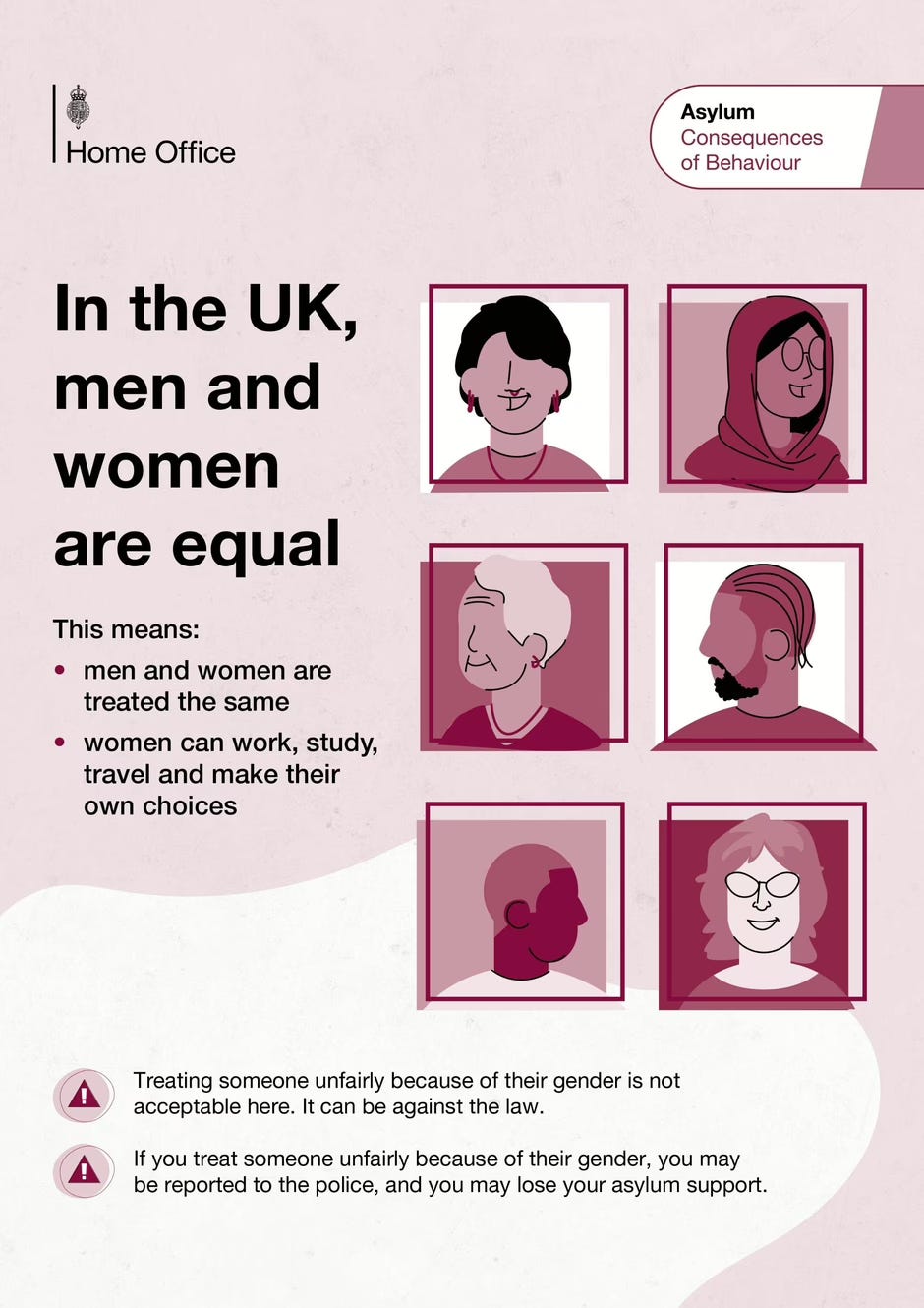
Then this, which is the one passage with any iron in it. “You must never stop a woman from working or studying, control what a woman wears or where she goes, stop a woman from seeing friends or family or make decisions for a woman without her agreement.”
Good. Categorical, and correct.
So here is my question, and I would like it answered by whoever was holding the pen when the music stopped. Why is the Home Office able to write “you must never“ about a woman’s evening class, and only “you could“ about a raped child?
Read those two sentences side by side and tell me what you think this country is signalling. I have read them a dozen times now and there seems to m e to be only one reading.
The mood of any sentence is a moral statement. They reached for the conditional because the conditional is where discretion lives, and discretion is the thing they mean to keep. Every “could“ in that document is a door propped open, and no back-street immigration solicitor in Britain needs it explained to him what a propped open door is for.
Write it properly, then. If you do these things you will be arrested. You will be prosecuted. You will be deported. Any claim you have made or might yet make is void from that moment, and there is no appeal on the ground that nobody explained it, because we are explaining it now, in the indicative, the purposeful. Once more with feeling.
And spare me that this is harsh. Name the benefit. Not the mechanism, not the treaty, not the case law. The benefit this country derives from keeping such men. I have put that question to officials for decades and never once had an answer that was not a shrug and a gesture towards Strasbourg.
We are not short of villains. We grow our own, in quantities more than sufficient sufficient for every domestic need.
Begone, and do not darken our shores.
Their casual attitude to child rape is disgusting
You are in a rich vein of form today, Gawain. They should have asked you to write their shoddy pamphlet. Then it wouldn’t have been vague - or shoddy!